SaaS
Cleverlab
SaaS platform for nutrition labelling in the food industry.
Client
Cleverlab
Food industry · Argentina
The challenge
What it was like before
Labelling a product was done by hand, in spreadsheets. Every time an ingredient or a supplier changed, the nutrition profile had to be rebuilt, the warning seals reviewed again and the label reassembled from scratch, product by product and version by version.
And there are rules a spreadsheet handles badly: sodium can trigger a seal along two different paths and only one of them needs to apply, or the calorie seal, which depends on the product already carrying another one. The history ended up living in files named things like formula_v3_OK, the costs in another spreadsheet with stale prices, and mistakes surfaced late, once the packaging was already at the printer.
- Eight tools open at once: the recipe in a spreadsheet, the nutrition data in another database, the warning seals in loose files, the design in a separate program and the costs in yet another spreadsheet.
- The nutrition profile had to be redone by hand every time an ingredient or a supplier changed.
- Rules a spreadsheet handles badly: sodium triggers a seal along two different paths, and the calorie seal depends on the product already carrying another seal.
- The history lived in loose files and the costs in another spreadsheet with stale prices.
- Mistakes surfaced late, once the packaging was already at the printer.
The solution
What we built
We built the system where that work is entered once and runs all the way to the label PDF: raw materials, the recipe with its cooking loss, nutrition profile, warning seals, allergens, claims and cost per kilo, all chained together.
The decision that shaped everything else was putting the entire calculation on the server, in a single engine: the screen computes nothing, so the number you see while editing the recipe is exactly the one that gets printed. It is multi-tenant because this is not a system for one company: each food business works with its own catalogue, its own prices and its own formulas, isolated from the rest. And recipes go through versions (draft, published, archived), because an issued label has to hold up later: you always know which version it came from.
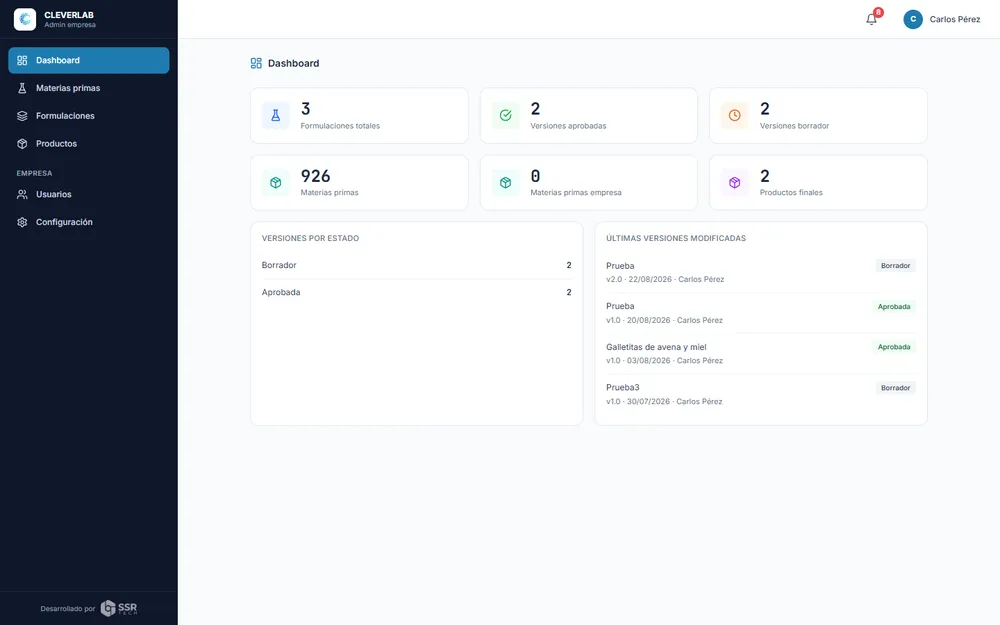
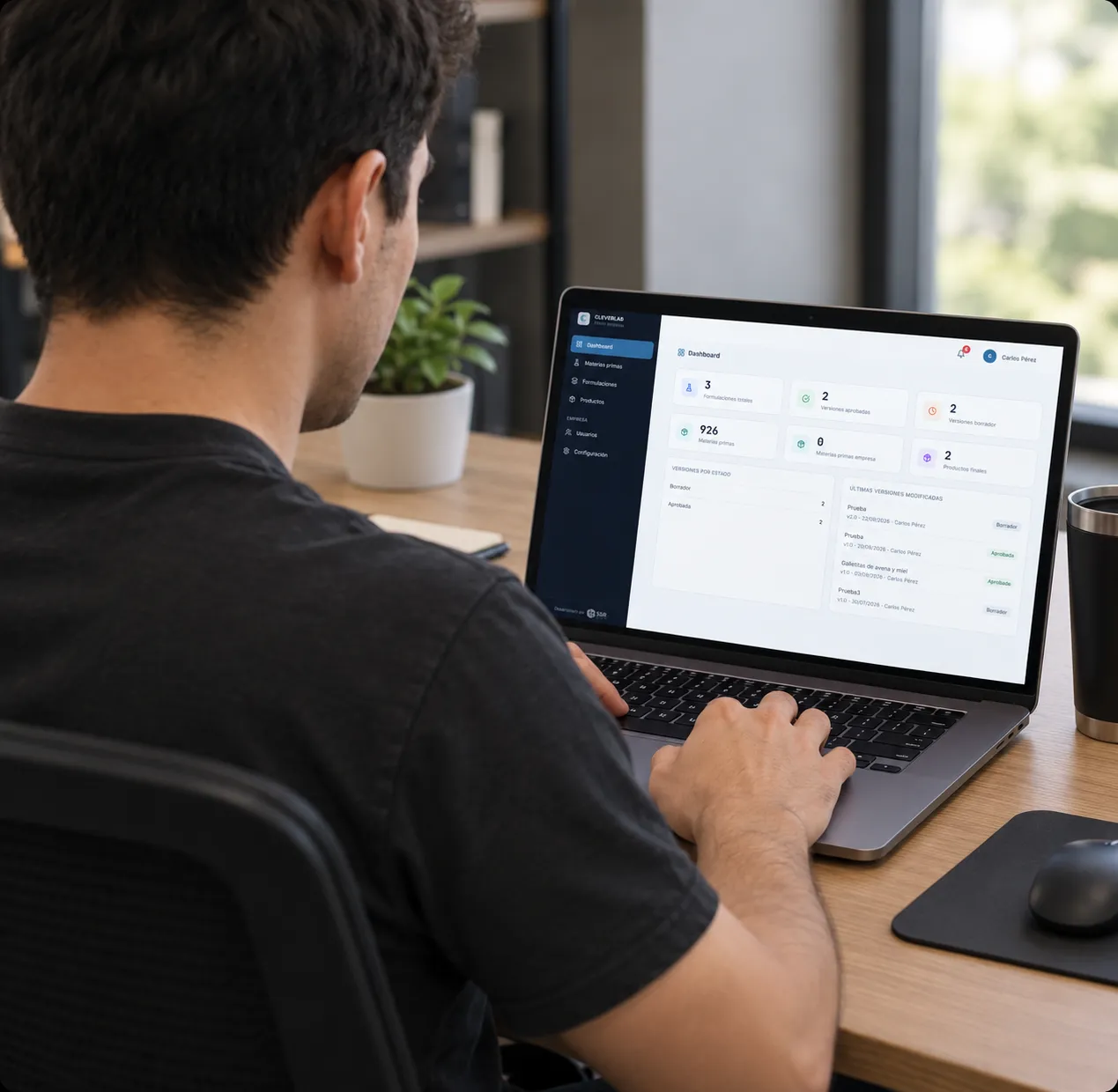
So that nobody starts from zero, the system ships with more than 900 ingredients already loaded with their nutrition data: each company adjusts them with its own suppliers, prices and specifications, and adds its own. It also works as an app you can install on a computer, tablet or phone. A key part of the project was the technical judgement: the rules the system applies did not come from reading the regulation alone, but from the real work of a team with years of labelling products in plants. They live in one place, so when the regulation changes it is updated once and every formula is up to date.
What we delivered
- Over 900 ingredients preloaded
- Nutrition calculation on the server
- Law 27.642 warning seals
- Label as print-ready PDF
- Recipe versioning
- Cost per kilo
- Multi-tenant
- Installable app
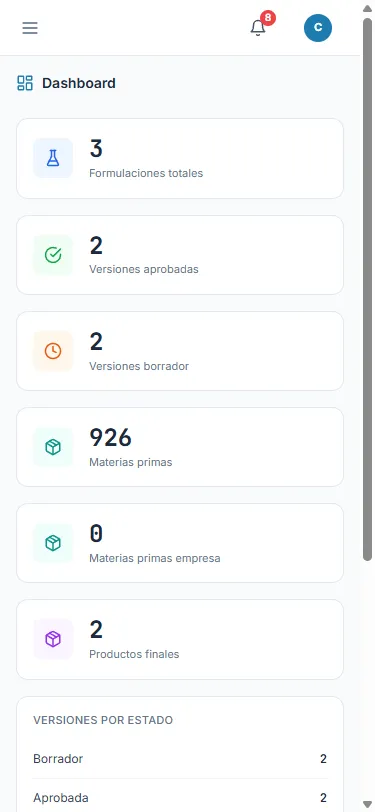
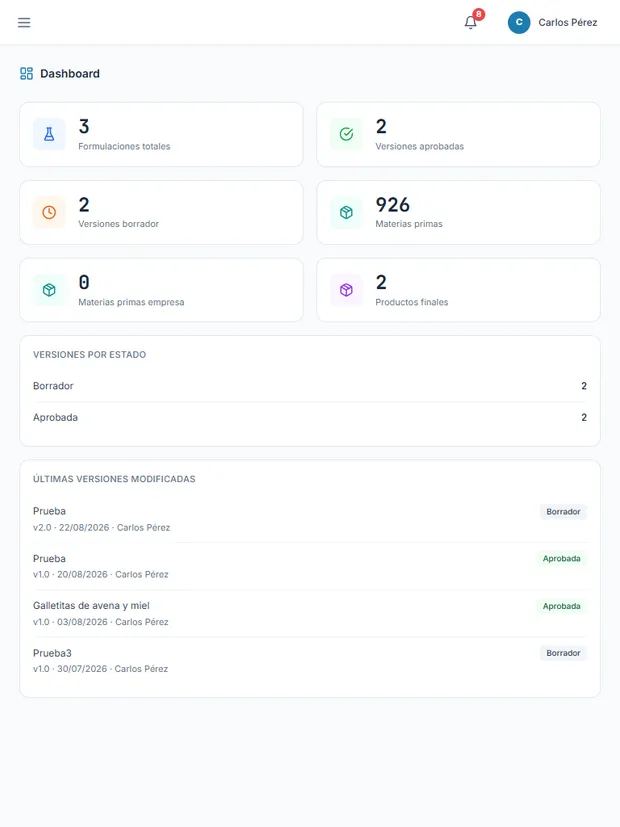
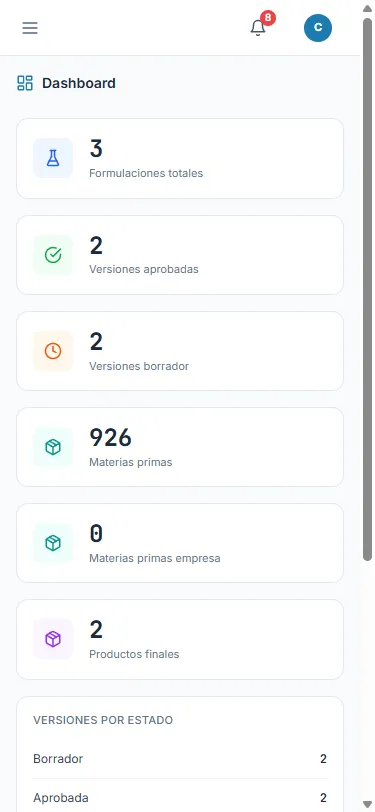
On screen
The product in use
Outcome
What changed
The full cycle, from ingredient to a label ready for the printer, lives in one place: it replaces manual spreadsheet work with a validated, versioned and traceable flow, with the official artwork for the warning seals embedded in the PDF. The system is deployed and in pre-launch evaluation, with food engineers testing it against the real environment.
Let's start
Got a project in mind?
Tell us your idea and we'll help you turn it into software. You get a real conversation back, not an automated quote.
Nos entendieron el problema antes de escribir una línea de código.